
"It is understood she may be depressed"
I was a missing person at 27. Help came from where I least expected it, and not from where it should have. Work treats people the same way.
“Helicopter joins search for missing city woman.”
That was me. I was 27. The paper printed my photo and said I’d left the house without telling my husband where I was going. Then it described me: “around 5ft 4ins, chubby, with long, straight, brown hair.” And then this: “It is understood she may be depressed.”
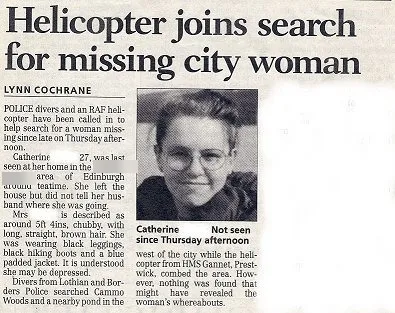
Understood by whom?
A couple of days later there was a second report. “Missing woman is found safe.” It said I’d been found “safe and well”. That’s the standard line when a missing person is found. I wasn’t well at all. I needed to go to A&E.
Even so, the paper wanted to know how much the search had cost. The police wouldn’t say, so the paper settled for this: “However, she is believed to suffer from depression.”
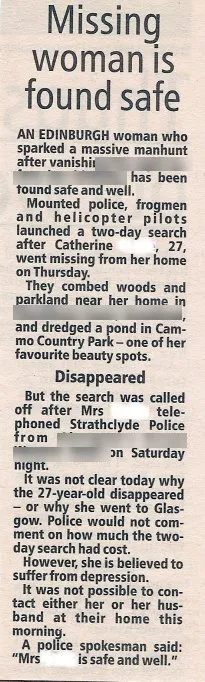
Believed by whom?
It was an incredibly dark time. Help came from where I didn’t expect it. Where I expected it most, it didn’t come at all.
Work is no different.
Where the help came from
When someone goes missing, the police focus on the next of kin first. That’s standard, and it can be pretty scary. But for my husband it changed very quickly. Their focus moved to supporting him, and my wider family too, who had gone out searching for me.
CID were brought in, and there was a team supporting him, including a liaison officer. They spent a long time at home with my husband, and gave him an immense amount of support and concern. When I was found, they gave us the same time and support.
The press were mixed. The television news was better than the papers, which wrote about me in language that makes you less of a human. Then they kept ringing our home number. In print, that became: “It was not possible to contact either her or her husband at their home this morning.”
Where it didn’t
I’d had a long history with psychiatric services by then. I’d spent Christmas and New Year in a psychiatric hospital, and I was discharged two weeks before I went missing. The first few weeks after leaving hospital are known to be when people are most at risk.
The healthcare team knew I was missing. They did nothing. They didn’t give the police any information, and they didn’t contact my husband or my GP.
I didn’t know any of that at the time. After A&E I was admitted again. I didn’t really have a choice, and it was one of my most difficult admissions. I gave them the benefit of the doubt. I was probably too hopeful that things might be different.
Once I was discharged and found out what they hadn’t done, that was the final straw. Healthcare is meant to be the most compassionate, kind and caring system we have. I vowed never to use psychiatric services again. I haven’t. I’ve paid a high price for that. But staying was damaging me too.
Work runs the same way
I see the same pattern at work, whether someone is just starting to slide or is already in deep difficulty.
Before I started MHScot, most of my support at work came from unexpected places, just from having conversations. For a while I was based in a building with around 30 other charities in it. I had some of the most amazing conversations there. I was supporting other people, and they were supporting me. It was a network of connectedness.
Nobody organised it. It happened in the kitchen, bumping into people, and quite often in the toilets. And sometimes you went looking for someone you’d spoken to the day before, because they’d been struggling and you wanted to check in on them.
That’s the opposite of what happened to me in healthcare. They knew I was missing, and nobody came looking.
My husband sees the same thing now. He cleans offices, and I’ve written on LinkedIn about how people in his building open up to him. Not to their manager or the wellbeing lead. To the cleaner. People tell him things because it feels safer. There’s no comeback.
A job title doesn’t make someone safe to talk to. The help often doesn’t come from the people whose job it is.
People as a cost
Those two cuttings gave my height, my build, a guess at my mental state and a question about the bill. That’s how they saw me.
Work talks about people the same way. Almost every headline about mental health at work is a bill: billions lost to the economy, so many days off per employee. Inside the workplace, someone who’s struggling gets the same treatment: a description, a guess at their mental state, and a question about what it’s costing. If they aren’t productive enough, they become a cost.
When we judge someone who’s struggling, make assumptions and come to our own conclusions about them, we make their world a whole lot smaller. Mine was made smaller.
Work also likes to think it’s a special place, kept for people who can give 100% and nothing less, people who make it their whole identity. It takes up a bigger part of our lives than it needs to, and the way we talk about work, and the way careers progress, make that feel compulsory.
It isn’t special. It’s a place full of people, some of them struggling. How we treat people at work matters just as much as how we treat them anywhere else.
Done to, not with
As a patient, things are done to you, not with you. That’s true across healthcare, not only in psychiatry. There’s a power imbalance, and you have very little say in what happens.
Work has the same hierarchy. Little agency, little control, no level playing field. And yet everyone is an adult.
Healthcare professionals and workplace professionals both need to flatten that imbalance. Less ego, less self-importance. Sit down with people as equals and talk about what they need.
The budgie
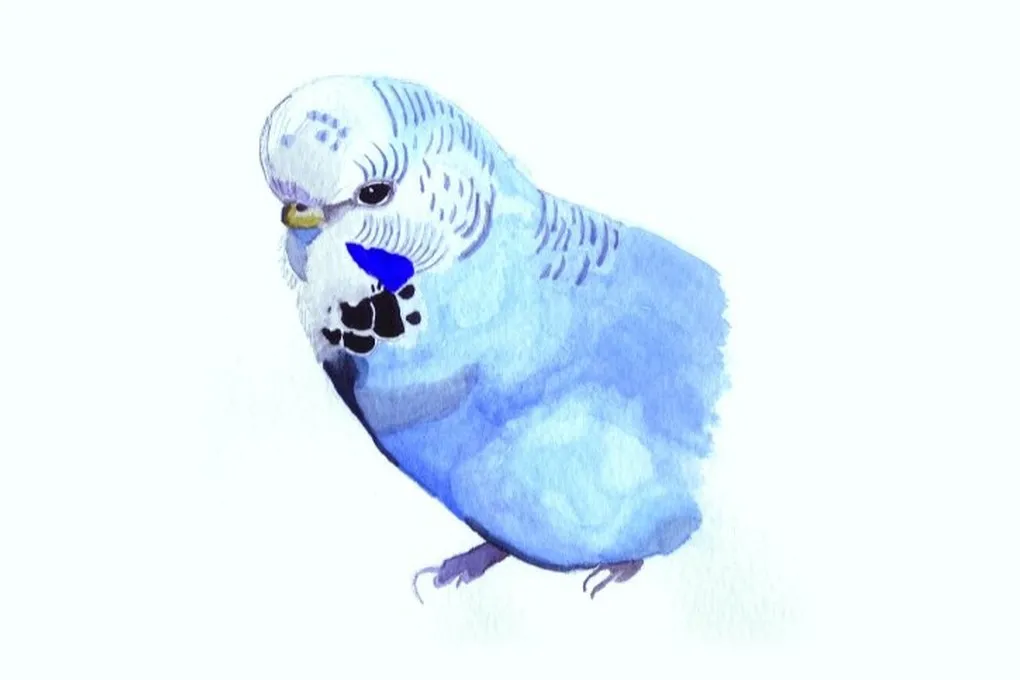
The budgie at the top of this post is Mickey, one of my budgies from way back. She was lovely, as they all are. I painted her not long after that admission, when I was using art to help my recovery.
At the time I felt worthless, as if I had no ability left at all. Painting reminded me I had skills. It also gave me a connection to animals, and animals give me more than humans do.
That’s what the cuttings missed, and what a lot of workplaces miss too. Someone in difficulty isn’t a description or a bill. They’re a person with skills. They need someone to come looking for them, and to be worked with, not done to.
Get new posts by email
New posts most weeks. No spam, unsubscribe any time.
If you'd like to support this blog, you can buy me a coffee.
Buy me a coffee on Ko-fiComments
Leave a comment
Comments appear once I've read them. I'll put up the ones that are about the post and are useful, interesting, supportive or constructive. Anything else won't go up. Your email is never shown or shared.
Loading comments…